In theory, camping is a beautiful, restorative experience. You are reconnecting with nature. You are unplugging from the digital world. You are breathing fresh pine air.
But in reality, camping usually begins with a brutal, high-stakes engineering test that has destroyed more relationships than assembling flat-pack Swedish furniture.
Picture this universal scenario: It is Friday night. You just drove three hours after a long week of work. The sun is rapidly setting. You are losing daylight. You open the trunk of your car, pull out a heavy canvas bag, and dump a pile of confusing, identical-looking nylon fabric and thirty-seven collapsible fiberglass poles onto the dirt. You and your partner then spend the next forty-five minutes screaming at each other in the pitch black, armed only with a dying headlamp, arguing about whether “Pole A” goes through the “Blue Sleeve” or the “Red Grommet.”
By the time the sad, lopsided tent is finally erected, nobody wants to be in the woods anymore. The romance is dead. The wilderness has defeated you.
But what if we could completely eliminate the poles? What if we could eradicate the marital strife? What if your shelter did not require an engineering degree, but simply the push of a single button?
My friends, throw away your aluminum stakes and put away the instruction manual. It is time to introduce you to the absolute pinnacle of high-tech, low-effort wilderness survival: The Inflatable camper.
Yes, you are reading that correctly. We are completely abandoning the rigid skeletons of traditional tents. We are talking about a massive, multi-room, heavy-duty outdoor shelter where the structural integrity is provided entirely by high-pressure air beams. It is essentially a high-end, weather-proof bouncy castle for exhausted adults.
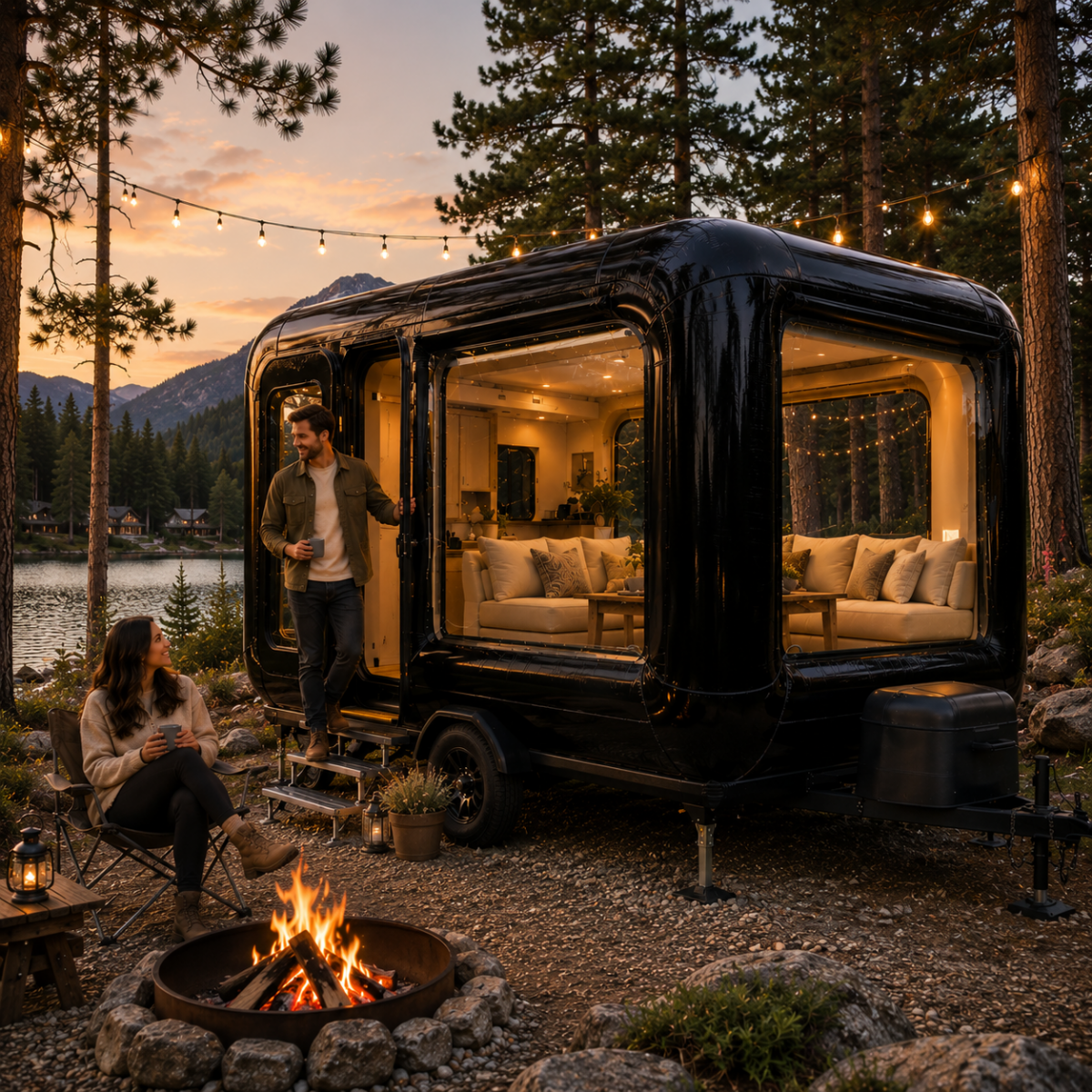
In this massive, deep-dive feature, we are leaving the fiberglass splinters in the past and fully embracing the magic of pneumatics. We will explore the hilarious physical comedy of resurrecting a vinyl mansion in the woods, the intense psychological warfare of deploying this beast at an RV park, and how to assert total, unwavering dominance over every other camper in the forest.
Plug in the compressor. We are inflating the great outdoors.
The Death of the Fiberglass Pole
To truly appreciate the absolute, viral genius of the Inflatable camper (also known as an Air Tent or Air Awning), you must understand the psychology of modern outdoor leisure.
We love the idea of camping, but we hate the labor of camping. The outdoor industry knows this. For years, they tried to invent “pop-up” tents, which are great right up until you try to fold them back down, at which point they turn into a cursed geometry puzzle that actively fights your hands until you angrily shove it into your trunk, permanently deformed.
The inflatable camper is the ultimate “work smarter, not harder” rebellion against the wilderness.
When you purchase an inflatable camper, you are making a loud, glorious declaration of laziness. You are actively saying, “I respect Mother Nature, but I refuse to do manual labor on my weekend off.” It completely changes the energy of your arrival at the campsite. You cannot possibly be stressed when your entire setup process consists of unrolling a giant mat, attaching a nozzle, and pressing a button. You are outsourcing your shelter construction to a machine. You can literally stand there, holding an iced beverage, watching your two-bedroom nylon house magically rise from the dirt like a waking giant. It is a flex of absolute, unbothered luxury.
Anatomy of a Pneumatic Mansion
You might look at the concept of an inflatable tent and assume it is just a giant, cheap pool float shaped like a cabin. You might assume that if a bird lands on the roof, the entire structure will violently pop, leaving you exposed to the elements. You would be gravely mistaken.
The brilliant, slightly mad engineers who designed premium Inflatable campers treat this technology with absolute, military-grade seriousness.
Let us unroll the blueprints, grab our air gauges, and break down the majestic hardware of your new pneumatic estate.
1. The Exoskeleton (The Air Beams)
This is the heart and soul of the beast. There are zero metal or fiberglass poles in this structure.
- The Technology: Instead of poles, the fabric is sewn around massive, hollow, heavy-duty Thermoplastic Polyurethane (TPU) tubes.
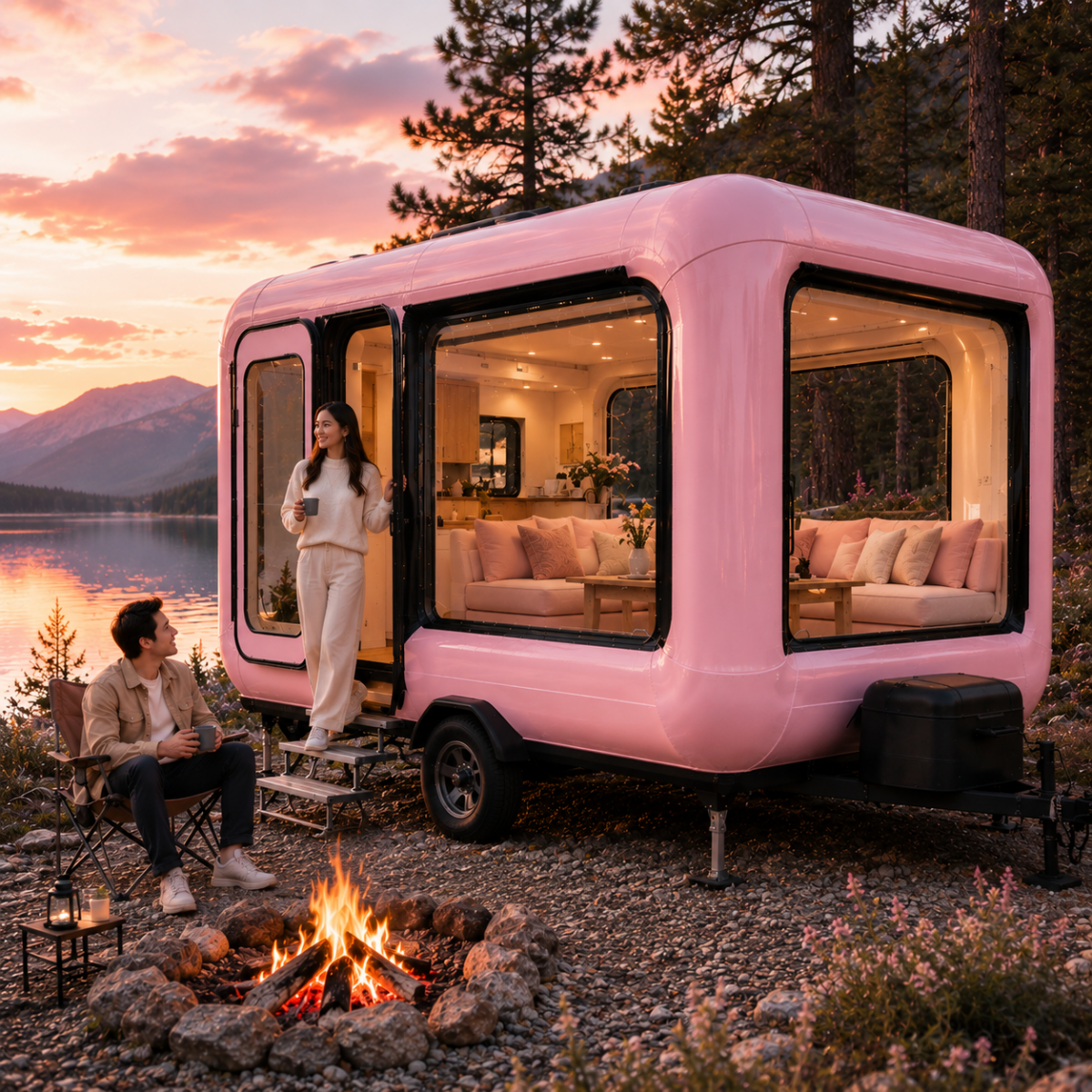
- The Strength: When you inflate these tubes to their recommended PSI, they become incredibly rigid. They are rock solid. You can literally punch the air beam, and it feels like hitting a rubberized tree trunk. In many ways, they are superior to traditional poles. If a massive gust of wind hits a fiberglass pole, the pole snaps, and your tent is ruined. If a massive gust of wind hits an air beam, it simply bends under the pressure, and then magically springs right back into its original shape. It is an indestructible, flexible fortress.
2. The Great Room (The Living Quarters)
Because air beams can support massive amounts of weight and span wide distances without snapping, inflatable campers are usually absurdly large.
- The Headroom: You do not have to crawl on your hands and knees like a feral raccoon to get inside. Most inflatable campers feature towering, seven-foot-tall ceilings. You can walk around entirely upright.
- The Layout: These are not just single rooms. They are sprawling estates. They feature divided “bedrooms” with blackout fabric so you can sleep past sunrise, and a massive central “living room” where you can set up a full dining table and chairs.
3. The Veranda (The Drive-Away Awning)
Many Inflatable campers are designed specifically to attach to the back of a van, an SUV, or a traditional RV.
- The Connection: They feature a fabric “tunnel” that magnetically or physically straps over the open trunk of your vehicle.
- The Flow: This means your car becomes a functional extension of the camper. You can leave the trunk open, sleep in the back of the SUV, and step seamlessly out into the massive, inflated living room. You have created a multi-room compound. It is the ultimate hybrid of “van life” and traditional tenting.
The Launch Sequence: Resurrecting the Beast
We must pause the glamorous glamping fantasy to discuss the highly theatrical, incredibly loud reality of erecting this structure. Building an air-mansion is a public spectacle.
The Symphony of the Compressor: You cannot blow up a three-room camper with a manual hand pump. Well, you could, if you want to perform a grueling, two-hour CrossFit workout that leaves your arms trembling so violently you cannot hold a marshmallow roasting stick.
You absolutely must use a high-powered, 12-volt electric air compressor plugged into your car. When you flip the switch, the peace and quiet of the tranquil forest is instantly shattered by the deafening, aggressive BRRRRRRRRRRR of the motor. You will momentarily annoy every single bird, squirrel, and human within a half-mile radius.
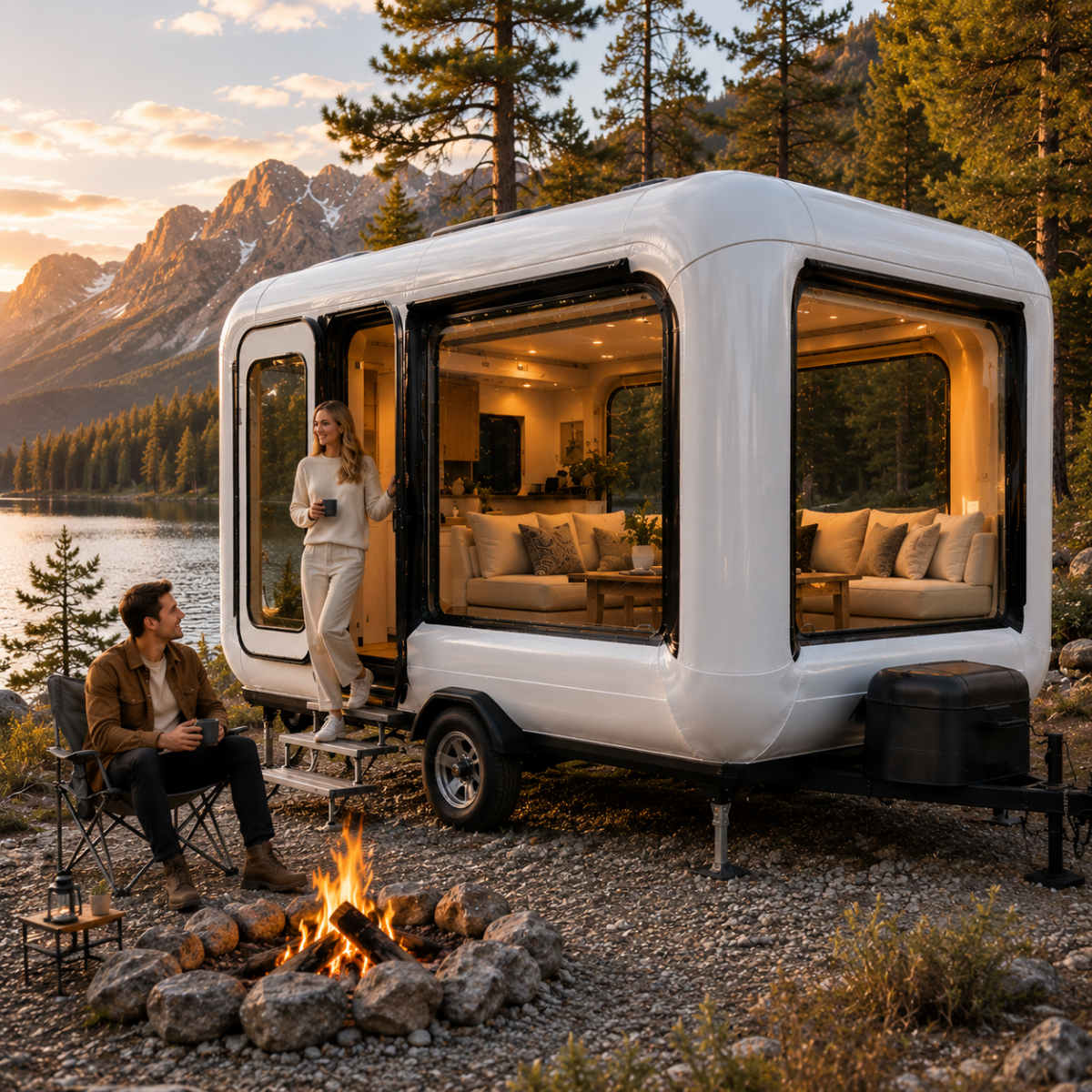
The Resurrection: But the noise is worth it for the visual payoff. As the compressor runs, the massive, flat puddle of heavy canvas on the ground begins to writhe. It looks like a giant, sleeping dragon taking its first breath. Slowly, the massive arched air beams begin to stand up. The roof pulls taut. The bedrooms pop into shape. The entire structure lifts itself off the ground, erecting a perfect, highly structured house in under three minutes. It is a cinematic, deeply satisfying event. You will stand there with your hands on your hips, looking at the other campers who are currently cursing at their aluminum poles, and you will feel like a technological god.
The RV Park Standoff: Social Dominance
Once your massive inflatable estate is fully erected, the social dynamics of the entire campground will fundamentally shift. You are bridging a massive cultural divide.
The Glampers vs. The Campers: In the outdoor world, there is a strict hierarchy. On one side, you have the “Real Campers” in their tiny, miserable backpacking tents, shivering in the mud. On the other side, you have the “RV Boomers” driving $300,000 diesel-pusher motorhomes that feature satellite television and marble countertops.
The Inflatable camper sits hilariously right in the middle, deeply confusing both groups. When you pull your Honda Civic into an RV park, parked directly between a massive Winnebago and a gleaming Airstream trailer, the RV owners will look at you with polite pity. They will watch you open your trunk and pull out a canvas bag. They will assume you are a peasant.
And then, you unleash the compressor. Within three minutes, you have inflated a structure that has a larger square footage than their expensive fiberglass trailers. The RV boomers will wander over, completely bewildered.
“Wait, there are no poles?” they will ask, tapping the rock-solid air beams in utter disbelief. “No, Gary,” you will reply, sipping a craft beer from a camp chair. “It is held up entirely by the atmosphere and my own audacity.” You have instantly earned their respect. You have hacked the system.
The Physics of the Wild: Paranoia and Survival
Owning a home made entirely of pressurized air in the unpredictable wilderness requires a specific type of psychological fortitude. You are no longer just a camper; you are a balloon pilot.
1. The Slow Leak Paranoia This is the dark side of the inflatable camper. When you sleep in a normal tent, you trust the metal poles. But when you sleep in an air tent, a tiny, irrational part of your brain is constantly terrified of a puncture. At 3:00 AM, the temperature drops, which naturally causes the air inside the beams to compress slightly. The tent might sag a tiny bit. You will wake up in the pitch black, look at the ceiling, and think, Is it falling? Am I being slowly suffocated by a nylon roof? You will spend ten minutes staring at the ceiling in the dark, waiting to see if it drops another inch, before finally trusting the engineering and going back to sleep.
2. The Mary Poppins Effect (The Parking Brake) Because an Inflatable camper is essentially a massive, lightweight pocket of air, its aerodynamic profile is terrible. It acts exactly like a giant, highly efficient parachute. If a thunderstorm rolls in and you have not properly staked down your massive air-mansion with heavy-duty steel pegs and guy lines, you are going to experience the Mary Poppins effect. A strong gust of wind will hit the broad side of your living room, and your entire house will silently lift off the ground and tumble elegantly across the campground into the lake. You must anchor the beast. Do not let your house fly away.
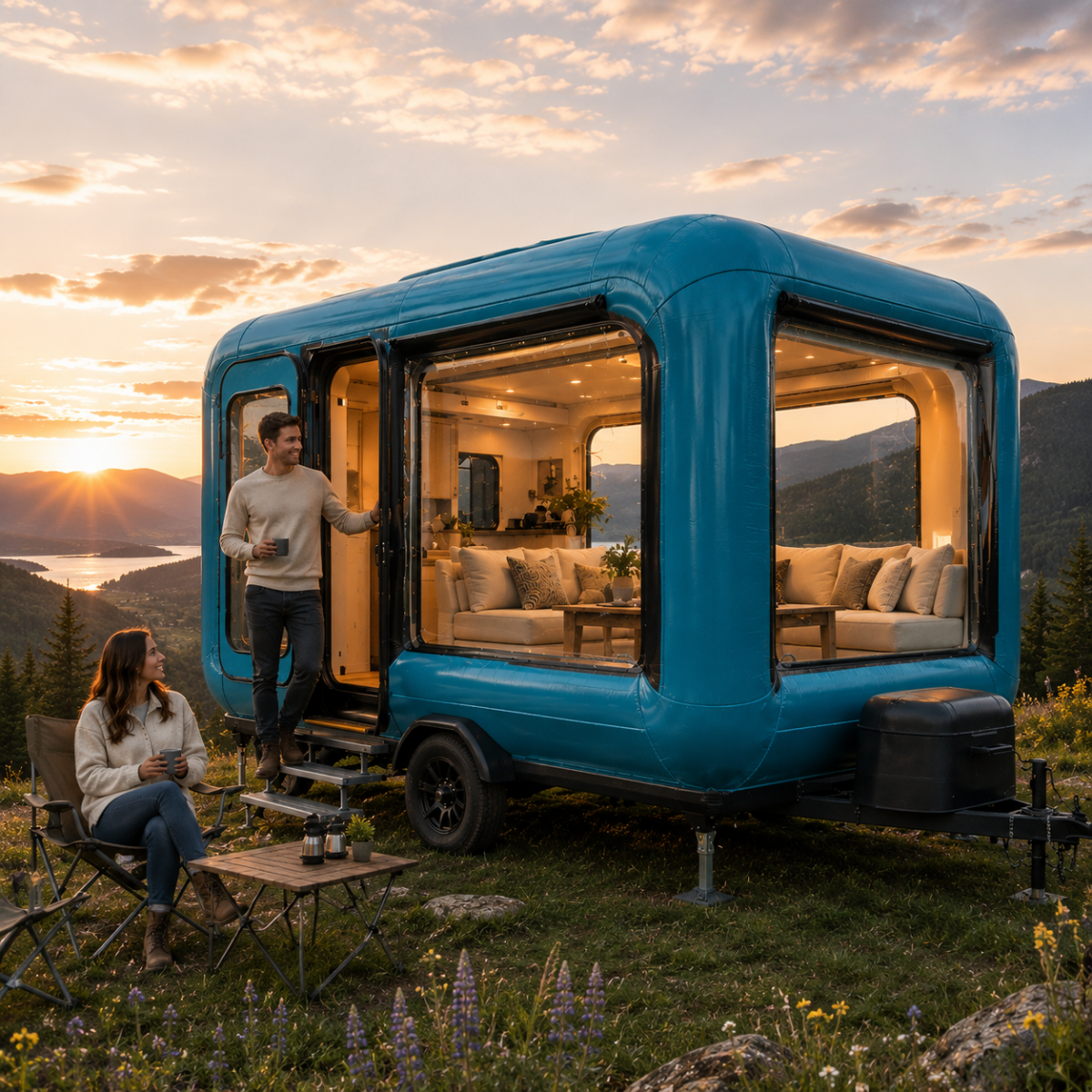
3. The Temperature Swing Air expands in the heat and contracts in the cold. If you inflate the beams to their absolute maximum firmness in the cool morning air, and then the blistering noon sun hits the dark fabric, the air inside will rapidly expand. The beams will become so rock-solid they feel like they might explode. You must become an amateur meteorologist, occasionally releasing a tiny puff of air from the valves in the afternoon to prevent your house from popping like a birthday balloon.
Teardown: Wrestling the Walrus
When Sunday morning arrives and it is time to go back to civilization, you must face the final boss of the weekend: decommissioning the air-mansion.
Setting it up was a three-minute breeze. Putting it away is an extreme test of human endurance.
The Great Exhalation: When you unscrew the massive Boston valves to let the air out, the entire structure collapses in a split second. It is a dramatic, highly satisfying whoosh, and your towering house instantly returns to a flat puddle of fabric.
The Walrus Roll: Here is the tragedy. The manufacturer used a giant, industrial vacuum press to fold this tent and fit it into the carrying bag at the factory. You do not have an industrial vacuum press. The air beams refuse to give up all their air willingly. To get the tent flat enough to fold, you must physically push the remaining air out of the tubes. You and your partner will literally have to lie down on the heavy canvas and roll your bodies across the length of the tent, looking exactly like two desperate, uncoordinated walruses flopping on a beach. You will squeeze every last cubic inch of air out of the fabric using pure, sweaty body weight.
The Zipper of Despair: You fold it. You roll it. It is still three times larger than the canvas carrying bag. You will aggressively shove the heavy roll of fabric into the bag. You will sit on the bag to compress it. You will pull the zipper with the strength of a thousand suns, praying the metal teeth do not burst under the intense pressure. It is a sweaty, undignified, exhausting end to a glamorous weekend, but it is the necessary price of inflatable luxury.
Embrace the Bouncy Castle Wilderness
The adult world is relentless. We are constantly pressured to work hard, to endure struggle, and to prove our worth through difficult tasks. Even our hobbies, like camping, are often turned into grueling tests of survival and endurance. We are told that if we aren’t suffering slightly in the woods, we aren’t “really” camping.
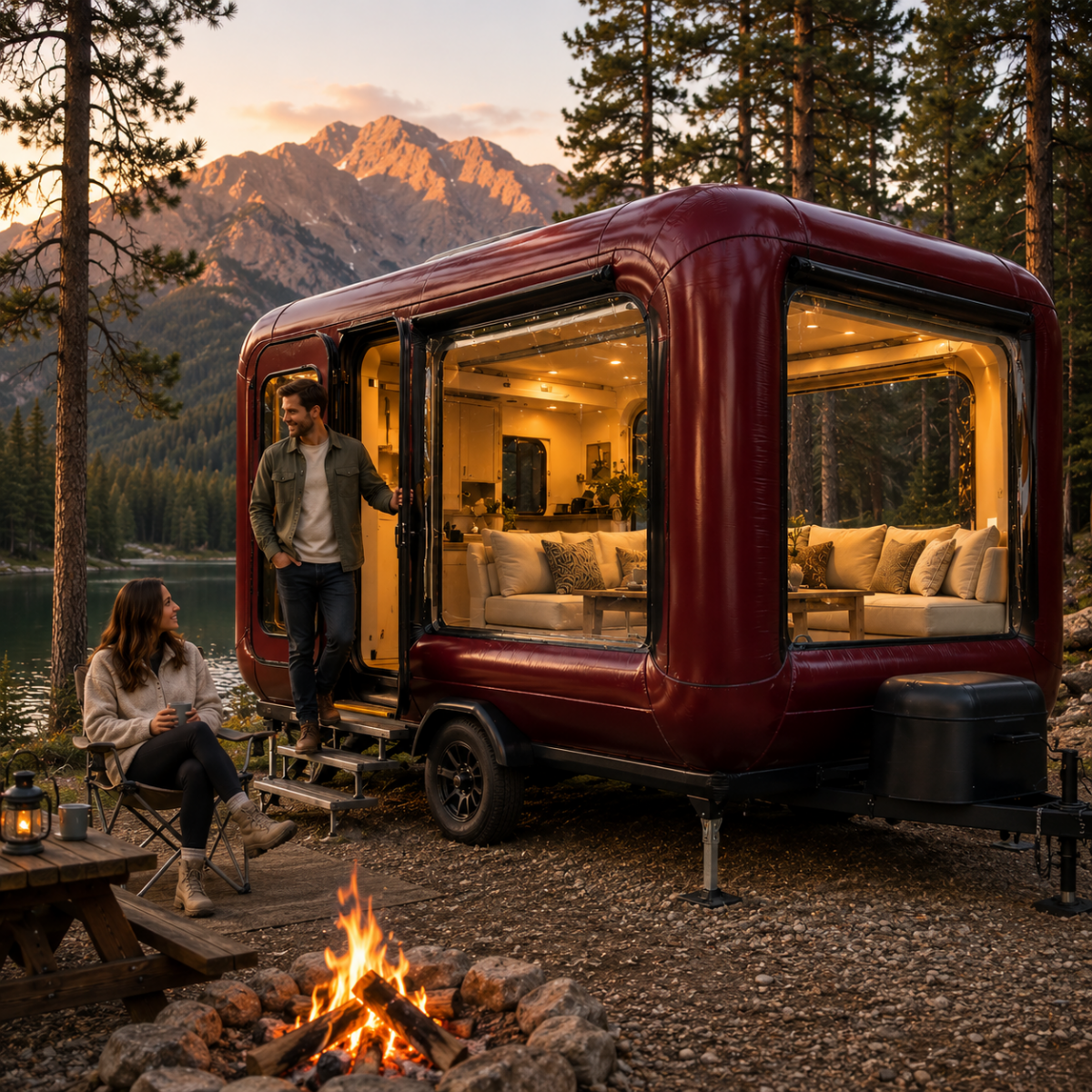
The Inflatable camper is a loud, hissing, compressor-powered refusal to let the wilderness make you suffer.
It proves that the absolute best way to enjoy nature is to completely eliminate the most annoying parts of it. It saves your relationship from the agony of building a fiberglass puzzle in the dark. It gives you a massive, comfortable, standing-height living room in the middle of a forest. It creates a hilarious, memorable spectacle for your entire campground. It turns a standard, stressful weekend in the dirt into a seamless, luxurious, pneumatic glamping event.
So, ignore the traditionalists. Leave the aluminum poles in the garage where they belong. Clear a massive spot at your campsite, plug the heavy-duty compressor into your dashboard, and flip the switch.
The great outdoors is waiting. The air beams are perfectly rigid. Step through the fabric door, zip the awning shut behind you, and relax. You have officially hacked the wilderness, and your bouncy-castle cabin is absolutely glorious. Happy camping!