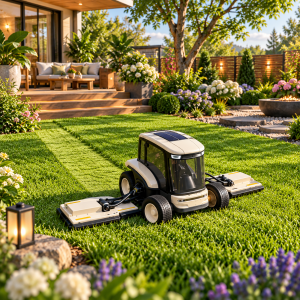
It is Saturday morning. The sun is shining, the birds are chirping, and the neighborhood is quiet. You step out onto your front porch, stretch your arms, take a deep breath of fresh air, and then look down. The grass has grown three inches since last week. The dandelions are organizing a hostile takeover. The pristine green carpet of your front yard is starting to look like an abandoned, overgrown jungle.
It is time to mow the lawn.
Historically, this is the exact, tragic moment your weekend joy completely evaporates. You trudge to the garage, open the heavy door, and pull out your riding lawn mower. For decades, the outdoor power equipment industry has given us exactly two aesthetic choices for these machines: “Angry Red Tractor” or “Sensible Green Tractor.” They are loud, they are hot, and they are aggressively, offensively ugly. You sit on a cracked, yellow foam seat, put on your noise-canceling headphones, and drive back and forth in straight lines for an hour and a half. It is a chore. It is a punishment. It is the absolute, soul-crushing pinnacle of boring adulthood.
But what if you didn’t have to be bored? What if, out there in the wildest, most creative, grease-stained garages of the world, a rebellion of absolute mechanical madness was brewing? What if some brilliant, unhinged gearhead looked at a boring riding mower, then looked at a rusty 1957 Chevrolet Bel Air, and asked a magical, life-changing question: “What if I cut my grass in a vintage hot rod?”
Start your engines, roll down the imaginary windows, and grab the steering wheel. It is time to introduce you to the undisputed king of suburban landscaping: The Classic car lawn mowers.
These are not toys you pick up in the garden aisle of your local big-box hardware store. These are custom-built, head-turning, grass-clipping masterpieces. They take the iconic, sweeping, universally beloved silhouettes of 1950s and 1960s classic cars and drop them right onto the chassis of a standard riding mower.

In this feature, we are throwing our dirty gardening gloves out the window and fully embracing the cruise. We are going to explore the hilarious psychology of the “Yard Rod,” the incredible backyard engineering required to build one, and how cruising your lawn in a retro automotive legend transforms a sweaty, tedious chore into the absolute best part of your entire week.
The Demise of the Suburban Blues
Why on earth would a rational, bill-paying adult spend their precious time and money building or buying a Classic car lawn mower? The answer is incredibly simple: because adulthood desperately, urgently needs more toys.
When we are kids, we have pedal cars, go-karts, and battery-powered jeeps. We drive them up and down the driveway with massive, unfiltered smiles on our faces. We pretend we are race car drivers. Then we grow up. We get office jobs, we pay mortgages, and our “ride-on” toys suddenly become functional, boring, depressing utility vehicles. The magic completely disappears.
Mounting a beautifully painted classic car shell onto a lawn mower brings the magic back. It is the ultimate shot of “Dopamine Decor” applied to outdoor power equipment.
When you sit behind the wheel of a miniature classic Mustang, fire up the cutting blades, and start cruising across your front lawn, you are no longer doing yard work. You are leading a parade of one. You are hosting a private classic car show. You cannot possibly be stressed about your crabgrass or your looming Monday morning emails when you are actively driving a cherry-red, fiberglass replica of a vintage Cadillac. It injects a massive sense of humor and absolute joy into an otherwise mundane Saturday morning. You stop mowing the lawn; you start taking the car out for a spin.
Anatomy of a Yard Rod: Under the Fiberglass Hood
You might be wondering how the mechanics of this actually work. How do you marry the elegant, sweeping tailfins of a 1950s cruiser with the spinning, dangerous steel blades of a landscaping implement?
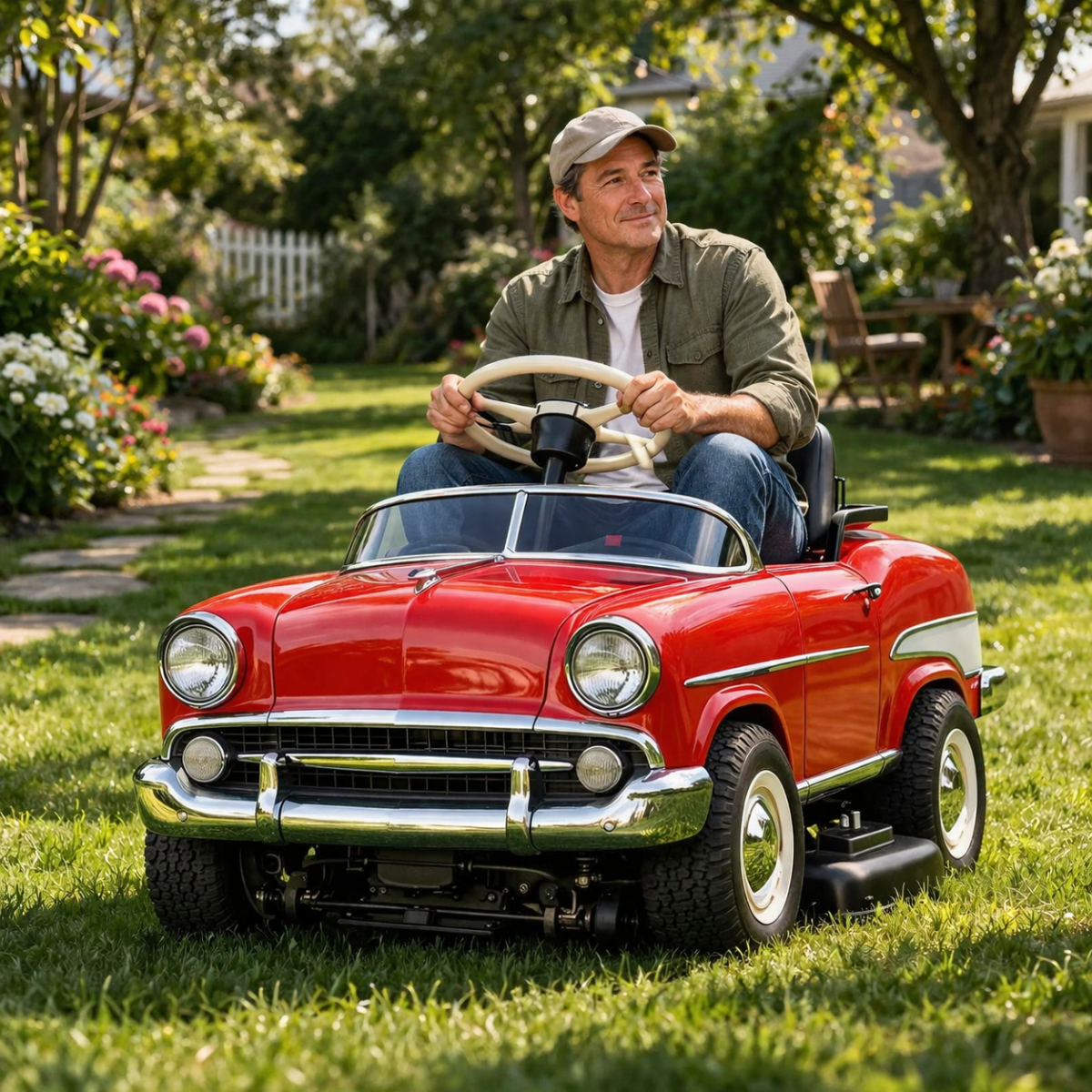
The beauty of the Classic car lawn mowers project is that the car part is almost entirely an elaborate, stunning “costume.” Underneath the vintage, painted curves beats the reliable, modern, roaring heart of a standard Briggs & Stratton or Kohler lawnmower engine.
Let us pop the hood and break down the brilliant engineering of your new ride.
The Marriage of Metal and Fiberglass: Builders usually start with a fully functional, standard riding mower. They aggressively strip off the boring green or red plastic cowlings, the plastic hood, and sometimes even the original seat. They are left with the naked metal chassis, the engine, the steering column, and the cutting deck.
Then, they carefully lower the custom car body over the frame.
- The Fabrication: This requires some serious garage ingenuity. Custom metal brackets have to be welded or bolted to the mower frame to hold the new body securely in place, making sure the fiberglass doesn’t rub against the spinning drive belts, the pulleys, or the rubber tires.
- The Airflow Crisis: Mower engines are air-cooled. They need to breathe constantly. If you just trap the engine inside a solid fiberglass box, it will overheat in ten minutes and catch fire mid-lawn. Builders have to ensure they cut proper air vents into the shell. The absolute genius builders disguise these necessary cooling holes as retro front grilles, functional hood scoops, or classic chrome side louvers.
The Chrome Bling (The Details Matter): You aren’t painting a garden shed; you are finishing a hot rod. A classic car is defined by its shiny chrome accents. Builders will scour the internet to source tiny, chrome hubcaps specifically designed to fit over the 8-inch rubber mower tires. They will install actual, shining chrome bumpers on the front and rear. It is utterly hilarious to have a heavy-duty chrome bumper on a vehicle that tops out at 5 miles per hour, but it is aesthetically mandatory.
Choosing Your Ride: The Backyard Showroom
In the wild, wonderful world of Classic car lawn mowers, there is a massive variety of styles. Just like buying a real vintage vehicle, you must choose the aesthetic alignment that perfectly matches your personality before you start tearing apart your tractor.
The ’57 Bel Air (The Sunday Cruiser) This is the absolute royalty of the genre.
- The Look: Sweeping rear tailfins, a massive, aggressive front grille, and usually painted in a flawless two-tone pastel color scheme (think baby blue and crisp white, or cherry red and cream).
- The Vibe: Pure 1950s rock-and-roll nostalgia. It looks like you should be pulling into a drive-in movie theater, not cutting the fescue.
- The Details: The best builds feature functioning, ultra-bright LED headlights set into the classic round bezels. This means you can mow the lawn at dusk while looking like a vintage street racer navigating the twilight.
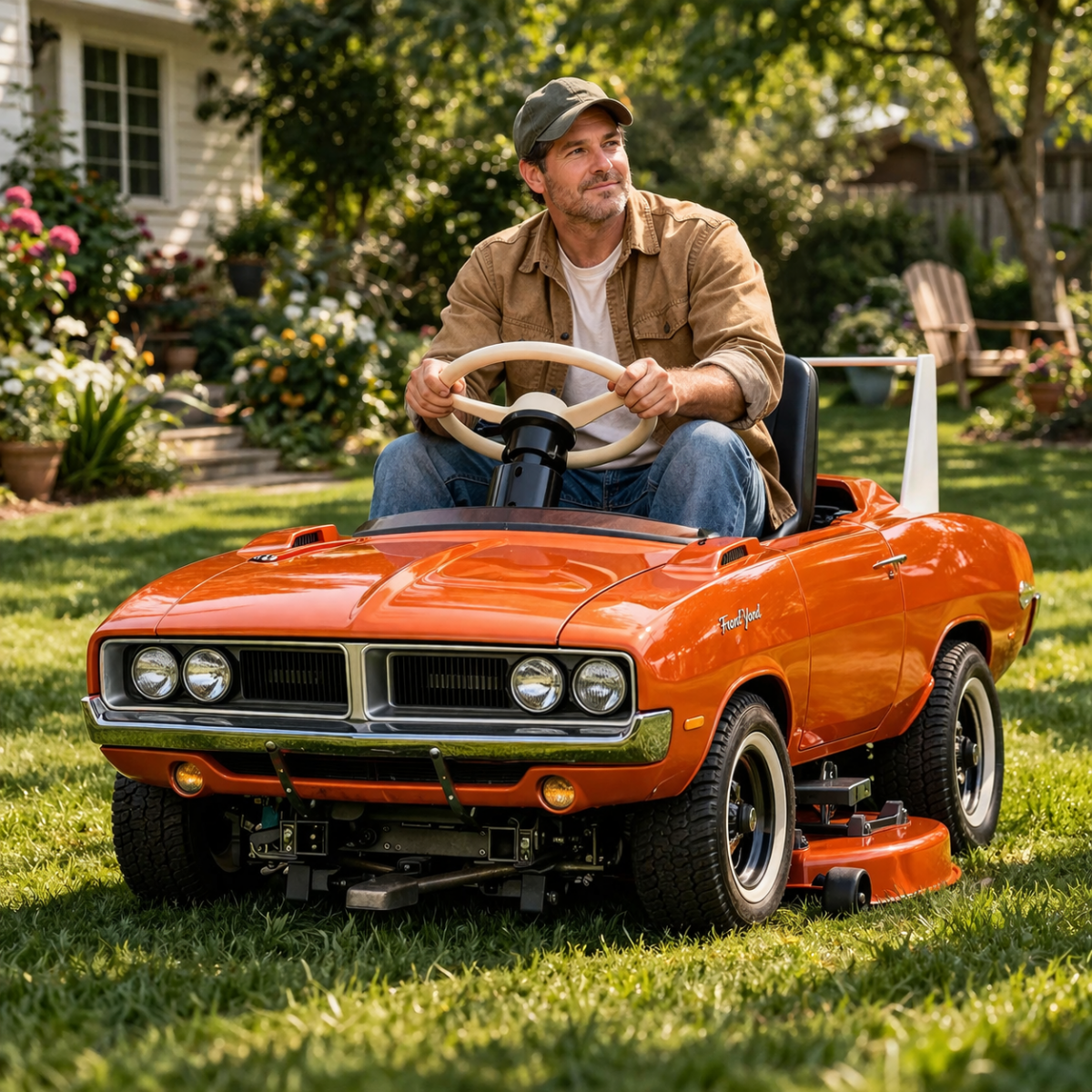
The Vintage Mustang (The Muscle Mower) For those who want to bring maximum horsepower energy to their landscaping routine.
- The Look: A long hood, a short rear deck, and aggressive racing stripes painted straight down the center of the fiberglass.
- The Vibe: High-octane dominance. When you ride this across the yard, you aren’t just cutting grass; you are taming the wild frontier. It demands that you wear aviator sunglasses while you mow.
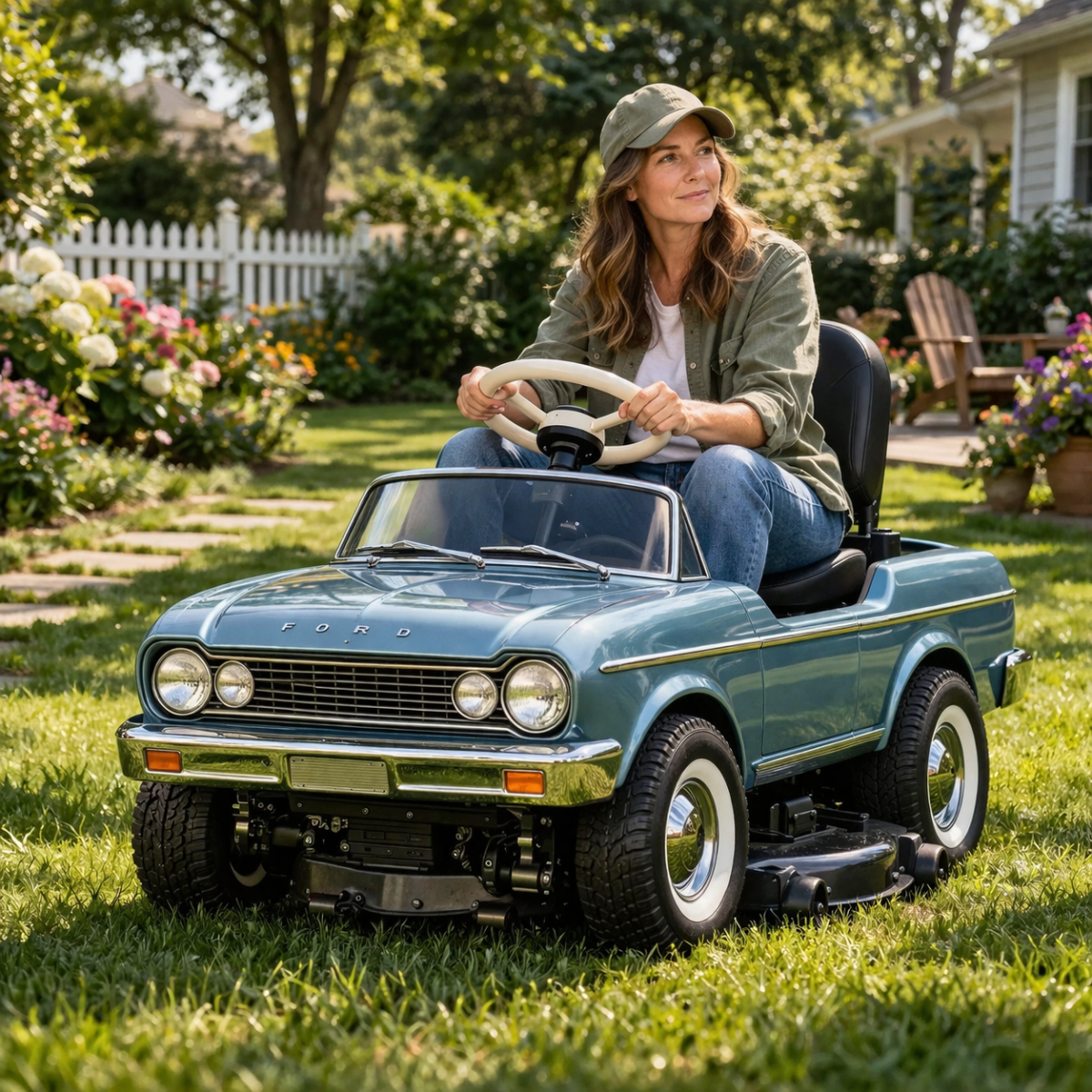
The Classic ’50s Pickup Truck (The Utility Hot Rod) For the homeowner who wants to maintain a tiny shred of agricultural dignity while still looking incredibly cool.
- The Look: A boxy front cab, rounded vintage fenders, and a small, functional “truck bed” over the rear wheels.
- The Vibe: Hardworking, blue-collar chic.
- The Details: The genius of the pickup truck design is the rear bed. You can actually use it to haul a small bag of fertilizer, your gardening gloves, or a small cooler filled with ice-cold beverages to keep you hydrated during the harvest.
The Neighborhood Hierarchy: Winning the Turf War
Let’s talk about the profound, undeniable social impact of owning a classic car mower.
In every suburban neighborhood across the world, there is a silent, unspoken, fiercely competitive war regarding lawn care. People judge each other intensely on the straightness of their mowing stripes, the deep greenness of their grass, and the price tag of their equipment.

Your neighbor, let’s call him Bob, might be very proud of his brand-new, $6,000 commercial zero-turn mower. Bob thinks he is the king of the cul-de-sac.
But when you roll out of your garage in a miniature, cherry-red 1957 Chevy with spinning steel blades underneath it, the competition is instantly over. You win. You have achieved total, undeniable patio dominance. Bob’s expensive commercial mower suddenly looks like a boring piece of industrial farming equipment.
The Spectators and the Paparazzi: Neighbors will literally stop walking their dogs to stare at you. Cars driving past your house will hit the brakes, put the car in reverse, and roll down their windows. People will point, laugh with sheer delight, and pull out their smartphones to record you for social media. You instantly become a local celebrity. You will find yourself waving like the Grand Marshal of a Thanksgiving Day parade every single time you make a turn around the old oak tree in the front yard.
The Kids’ Carnival Ride: Children, who normally ignore yard work entirely, will be utterly fascinated by your machine. They will treat your mower like a brand-new, premium ride at an amusement park. Be prepared to give “safety rides” (with the cutting blades completely, permanently disengaged, of course) up and down the driveway. You are no longer just doing chores; you are creating legendary, unforgettable core memories for the entire neighborhood.
The HOA Standoff: If you live in a neighborhood governed by a strict Homeowners Association—the kind that issues fines if your trash can is visible from the street—this mower is the ultimate power move. They might hate that you are having so much fun, but there is absolutely no rule in their boring handbook that says a lawnmower cannot look like a classic car. You are legally bulletproof, and you look fantastic doing it.
The Garage Lifestyle: Pimping Your Ride
Once the body is successfully mounted and the engine is breathing, the real fun begins. A classic car mower is a blank canvas for gearhead creativity. You cannot just leave it stock. You have to accessorize the cabin.
The Interior Cabin Upgrade: You are going to spend an hour on this machine every Saturday; it needs to be comfortable.
- The Seat: Throw away the cracked, miserable yellow foam seat that came with the factory mower. Install a low-back marine vinyl bucket seat with contrast diamond stitching.
- The Dashboard: Glue some faux-vintage analog gauges to the fiberglass dash. They don’t have to work; they just have to look incredibly cool.
The Audio System: A retro-styled Bluetooth radio mounted to the dashboard is absolutely mandatory. You cannot cruise in a vintage car without an appropriate soundtrack. You must blast The Beach Boys, Chuck Berry, or Fleetwood Mac from marine-grade waterproof speakers while you edge the driveway. The music completely drowns out the sound of the mower engine, completing the illusion.
The Cupholder: Arguably the most important modification in the entire build. A heavy-duty, gimbaled (self-leveling) cupholder ensures that your iced tea, lemonade, or weekend beverage does not spill a single drop when you inevitably hit a hidden molehill in the backyard.
Washing and Waxing: Maintenance with Pride
You do not treat Classic car lawn mowers like normal lawn mowers. A normal mower gets parked in the dark, dusty corner of the shed, covered in dried grass clippings, until the next weekend.
A yard rod demands respect.
After you finish mowing, you must pull it onto the driveway and wash it. You break out the sponge, the soapy water, and the microfiber towels. You wash the grass off the fiberglass fenders. You polish the tiny chrome hubcaps. You might even apply a coat of automotive wax to keep the cherry-red paint gleaming under the harsh summer sun. It is a labor of love. You are detailing a show car that just happens to smell like fresh-cut fescue.
Keep Your Motor Running
Adulthood is full of heavy obligations. We have to pay taxes, clean the gutters, fix the leaky roof, and cut the grass week after relentless week. It is very easy to let the weekend become a depressing, exhausting checklist of duties.
The classic car mower is a loud, colorful, beautifully engineered refusal to let the chores win.
It is a monument to creativity, humor, and the eternal gearhead spirit. It proves that with a little fiberglass, a good paint job, and a whole lot of imagination, even the most boring, sweaty household task can be transformed into a legitimate joyride. It changes your entire perspective on homeownership. You no longer look out the window and dread the overgrown grass; you look out the window, grab your keys, and think, “It is a beautiful day for a cruise.”
So, fire up the engine. Turn on the chrome headlights. Blast the rock and roll from the Bluetooth speakers. The lawn is waiting, and your vintage ride is fueled up and ready to roll. Cut the grass, but make it an absolute classic.